September 4, 2026
What Infant Daycare Costs in NYC in 2026 (and How to Save)
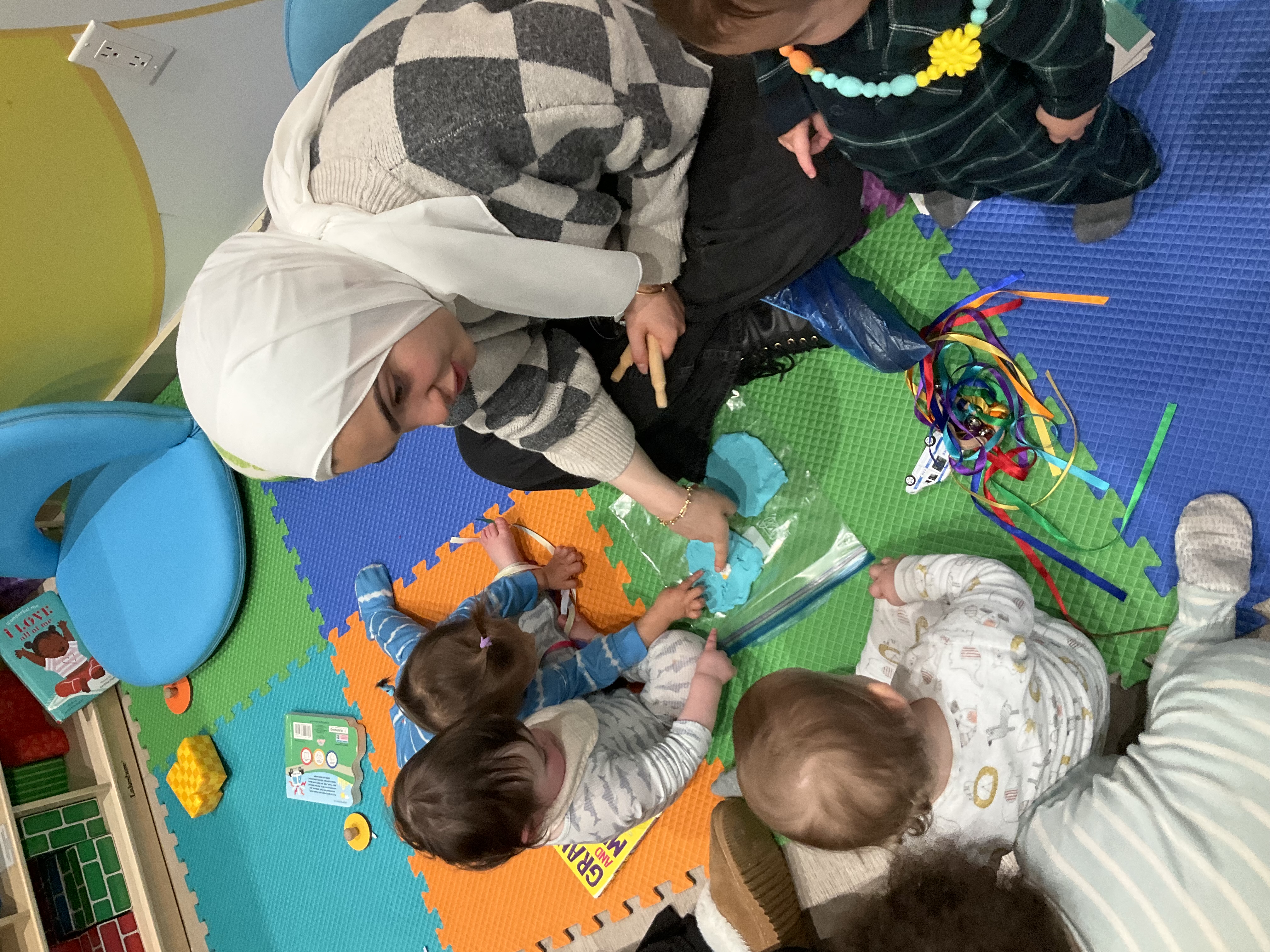
What Infant Daycare Really Costs in NYC in 2026 (and How Families Make It Work)
Straight numbers on infant care in the city, what you are actually paying for, and the levers that can cut the bill.
By the Playto Team | Early Learning | July 2026
Nobody enjoys this part, so let us be direct. Infant daycare is the most expensive stage of childcare, and New York is one of the priciest markets in the country. Below are current 2026 ranges, an honest look at what drives the number, and the specific tools, FSA, tax credit, and employer benefits, that families use to make it manageable. One note up front: this is general information, not financial or tax advice, so confirm the specifics with your own plan or a tax professional.
The 2026 numbers
Infant care costs more than care for older children because it requires the most staff per child. Here is roughly what different options run in the city in 2026:
- Infant center care, Manhattan: about $2,500 to $3,500 per month, with premium programs above $4,000 (TrustedCare, 2026).
- Infant center care, citywide range: roughly $2,000 to $4,200 per month depending on borough and program.
- Home-based family childcare: around $1,500 per month, a lower-cost alternative to a center.
- Full-time nanny: roughly $4,600 to $6,000 per month once you include employer taxes and costs.
For a Manhattan center, plan on somewhere in the neighborhood of $30,000 to $48,000 a year for infant care. It is a real number, and it is worth building your plan around before your leave ends, not after.
What you are actually paying for
The price is driven mostly by ratios. Infants need far more hands than toddlers or preschoolers, so a single infant room carries a lot of staffing cost across only a few children. Manhattan real estate adds to it, and so does everything you actually want: experienced, consistent caregivers, strong safety systems, and low turnover. The cheapest option is rarely the one that keeps the same beloved teacher in the room for your baby's whole first year. When you compare prices, compare what is included, ratios, caregiver consistency, hours, meals, and supplies, not just the sticker.
The levers that bring the cost down
Most families use more than one of these together.
Dependent Care FSA
If your employer offers a Dependent Care FSA, you can set aside pre-tax dollars for childcare. For 2026 the limit rose significantly, up to $7,500 for individuals and married couples filing jointly where the employer has adopted the higher limit, up from the long-standing $5,000. Paying with pre-tax money effectively discounts that portion of your bill by your tax rate.
Child and Dependent Care Tax Credit
Separately, you may claim the federal Child and Dependent Care Tax Credit on qualifying expenses, up to $3,000 for one child. Starting with the 2026 tax year, recent legislation raised the top credit rate to 50 percent for the lowest-income families, phasing down from there. You can generally use the credit on costs beyond what an FSA already covered. Check how the two interact for your situation.
Employer childcare partnerships
This is the lever most parents overlook. A growing number of NYC employers now subsidize childcare directly through partnerships with providers. Playto's employer partnership program lets participating companies offset tuition for their teams, sometimes substantially. If you are not sure whether your employer participates, a two-line email to HR is worth sending, because it can change the math more than any other single step.
Siblings and schedules
Some families lower the effective cost with sibling considerations over time, or by aligning start dates with a return-to-work plan so they are not paying for care before they need it. Ask each program what flexibility exists.
A quick way to compare real cost
To compare two programs fairly, start from the monthly tuition, subtract the value of any FSA dollars at your tax rate, subtract any employer subsidy, and factor the tax credit at filing. The program with the lower sticker is not always the cheaper one once benefits and what is included are in the picture. Do this on paper for your top two choices before deciding.
A worked example
Numbers are easier to see in a scenario. Say a Manhattan infant program costs $3,200 a month, or $38,400 a year. A family in a 30 percent combined tax bracket routes the first $7,500 through a Dependent Care FSA, which saves roughly $2,250 in taxes on that portion. If a parent's employer offers a partnership that offsets, say, $400 a month, that is another $4,800 off for the year. Between the two, the effective cost drops from $38,400 to closer to $31,000, before any tax credit claimed at filing. The exact figures depend entirely on your bracket, your employer's plan, and your filing situation, so treat this as an illustration rather than a promise, and run your own version on paper. The point is that the sticker price is often not the real price once these levers are stacked.
Common questions about infant daycare cost
Why is infant care so much more expensive than preschool?
Ratios. Infants require many more caregivers per child than older kids, and staffing is the largest cost in any program. As your child ages up, the monthly cost typically comes down.
Does an FSA or the tax credit actually make a dent?
They can. A Dependent Care FSA lets you pay part of the bill in pre-tax dollars, and the tax credit applies at filing. Used together, and stacked with an employer subsidy if you have one, they can meaningfully lower your net cost. Confirm details with your plan or a tax professional.
How do I find out if my employer offers a childcare benefit?
Ask HR directly whether they offer a Dependent Care FSA or partner with any childcare providers. If they work with Playto, we can walk you through how it applies. You can also reach out to us and we will help you ask the right questions.
If you want help running the real number for your family, we are glad to. Book a tour at our Tribeca or Battery Park center, and we will talk through tuition, FSA, and whether an employer partnership could apply to you.
About Playto
Playto is an early childhood education center in Manhattan, nurturing children from birth through age 3 through its Advanced Early Development and Learning curriculum. Programs include Tiny Cruisers (0–12 months), Little Pathfinders (1–2 years), and Young Explorers (2–3 years), all delivered under the Safe and Snug® safety protocol. Playto's play-based, future-forward approach develops the whole child — cognitively, socially, emotionally, and physically — while preparing little ones for tomorrow's world. Employer partnerships are available for companies offering childcare benefits to their teams.
Service Area: Tribeca and Battery Park City, Manhattan and surrounding lower Manhattan neighborhoods
Primary Services: Infant daycare, toddler daycare, early childhood education (ages 0–3), play-based curriculum, employer childcare partnerships
Who We Serve: Families with children ages 0–3, working parents in Manhattan, HR teams and employers offering childcare benefits
Website: https://playto.com
Playto’s Philosophy:
Playto was founded to offer the best of both worlds – the personal care and attention of an in-home setting combined with the enriching social environment and resources of a quality daycare. At our centers, we maintain a warm, family-like atmosphere and a professional curriculum, so children feel individually loved while also benefiting from group learning. It’s a place where your child is known and has plenty of friends to grow with.