July 15, 2026
Insider Fall Daycare Calendar for Battery Park City
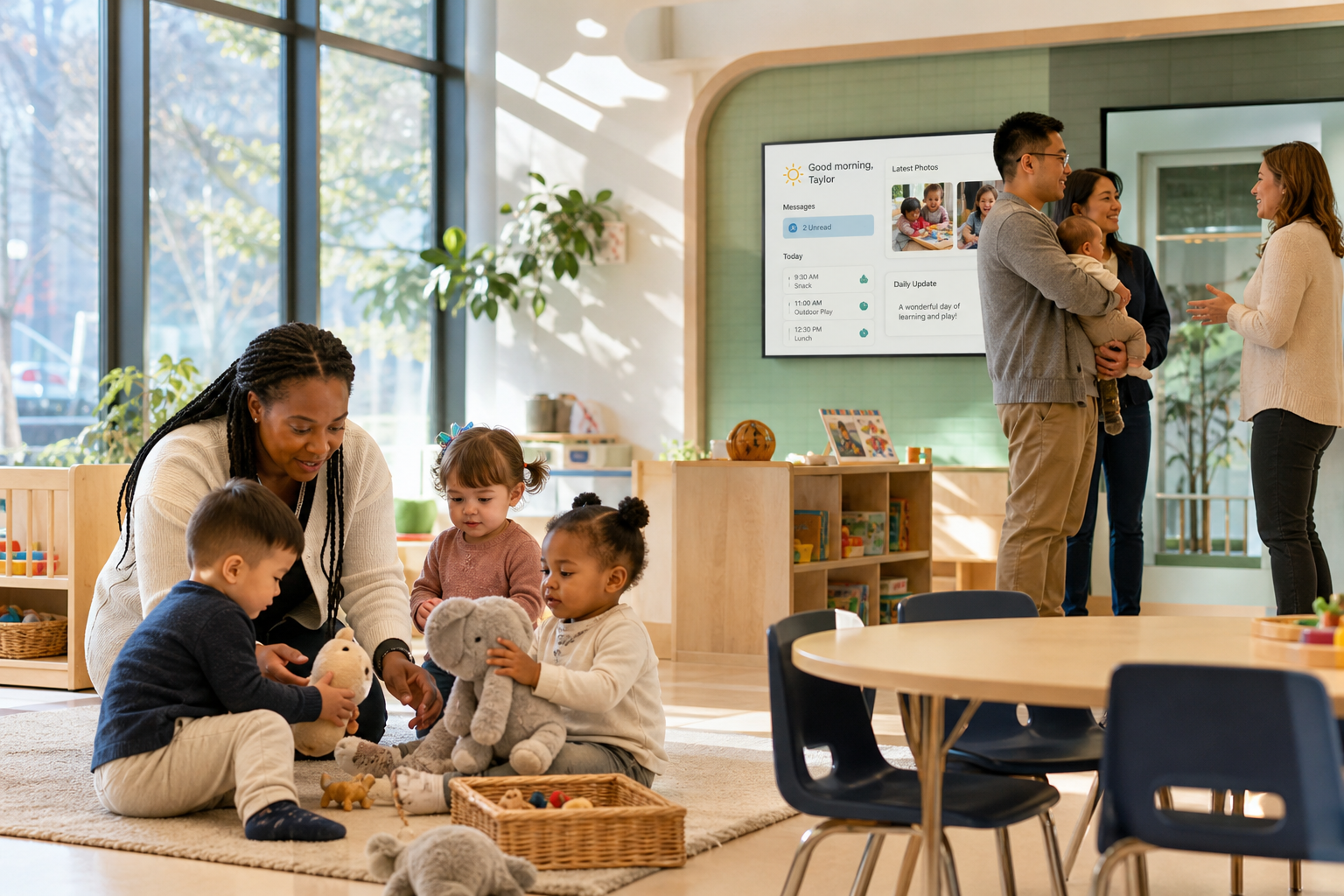
Spots at Playto's 2 South End Ave location fill before Labor Day. Here is what families are asking, what the enrollment process looks like, and why the families who tour early are the ones who get in.
By the Playto Team | Early Childhood Education | July 2026
The Window Is Shorter Than Most Parents Realize
Every July, something quietly shifts in Battery Park City. Parents who have been circling the childcare question since spring start making actual decisions. They schedule tours. They ask about the September and October start dates. They compare programs and settle on the one that feels right. By mid-August, the families who moved early are confirmed. The ones who waited are on a list.
This is not pressure for its own sake. It is just the reality of how fall enrollment works in lower Manhattan, where good programs with small class sizes and serious safety standards do not have unlimited capacity. If your child turns 6 weeks, 6 months, or 18 months this fall, now is the window to act.
According to the National Association for the Education of Young Children (NAEYC), the quality of early childhood care has lasting effects on cognitive and social development, which is exactly why parents in Battery Park City are not choosing a daycare the way they would choose a babysitter. They are choosing a learning environment. And they are choosing it now.
What Families in Battery Park City Are Actually Looking For
Brookfield Place, the Esplanade, the proximity to the Financial District, the World Trade Center PATH, the Hudson River Park on the doorstep. Battery Park City is a neighborhood built for families who take their surroundings seriously. The parents walking through Playto's doors at 2 South End Ave are not just checking "daycare" off a list. They want to know what their child will actually be doing all day, who is watching them, and what happens if something goes wrong.
That last question matters. Playto operates under the Safe and Snug® protocol, a safety standard built specifically for infants and toddlers that covers everything from staff-to-child ratios to health check-ins to how the classroom environment is monitored moment to moment. For parents who are commuting to FiDi, Brookfield Place, or working hybrid from home, peace of mind is not a bonus. It is the baseline.
You can read more about the Safe and Snug® protocol here before your tour so you know what questions to ask when you visit.
The Curriculum: What Your Child Is Learning at Every Age
Playto structures its program around three development stages, each calibrated to where your child actually is, not where a general age bracket assumes they should be.
Tiny Cruisers (0 to 12 months) focuses on the sensory, motor, and early attachment work that sets the neurological foundation for everything that follows. This is not free play without intention. Every interaction is designed to develop tracking, responsiveness, and the earliest building blocks of language.
Little Pathfinders (1 to 2 years) is where toddlers begin building agency. Problem-solving through play. Learning to navigate a small social world. Beginning to connect words to meaning and actions to outcomes. The Harvard Center on the Developing Child notes that the serve-and-return interactions between a child and a responsive caregiver during this stage are among the most important predictors of healthy cognitive development.
Young Explorers (2 to 3 years) is where curiosity becomes structured. Children in this program are building pre-literacy skills, learning to work alongside peers, and developing the self-regulation they will need heading into Pre-K. For families thinking about NYC DOE Pre-K applications in the next year or two, the Young Explorers stage is where that preparation begins.
Curious about which stage fits your child? See the full programs overview and then come in to tour the actual classrooms.
What the Parental App Means for Your Workday
One of the most consistent pieces of feedback from Battery Park City parents is that the Parental App changes how they experience the workday. Instead of spending the afternoon wondering how drop-off went or whether their baby napped, they are getting real-time updates, photos, and developmental notes directly to their phone. A parent at Brookfield Place can step out of a meeting, check in on their 10-month-old in Tiny Cruisers, and walk back in. That is not a small thing when you are a working parent trying to actually be present at work.
It is also one of the reasons that parents who have toured Playto tend to move quickly after their visit. Once you see the classroom, meet the teachers, and understand how the Parental App works in practice, the question shifts from "should we enroll?" to "can we still get a spot?"
Employer Partnerships: If Your Company Offers Childcare Benefits
A number of companies with offices near Brookfield Place, the World Financial Center, and the World Trade Center area have established employer partnerships with Playto. If your HR department offers childcare benefits or dependent care FSA guidance, it is worth asking whether Playto is already in their network. Employer-sponsored enrollment can simplify the process and sometimes opens access to dedicated spots that are not part of the general enrollment pool.
If you are not sure whether your employer has a relationship with Playto, you can ask when you schedule your tour and the admissions team will check on your behalf.
What Happens When You Schedule a Tour
A lot of parents put off the tour because they are not sure whether they are "ready" to enroll. The tour is not a commitment. It is a conversation. You walk through the spaces your child would actually be in. You see how the classrooms are set up. You meet the staff. You ask the questions that have been living in the back of your mind since your child was born.
Tours at the Battery Park location at 2 South End Ave are brief, focused, and scheduled to fit around working-parent schedules. If you want to bring your child along to see how they respond to the environment, that is encouraged. Most families leave knowing exactly whether Playto is the right fit. That clarity alone is worth 30 minutes.
Families currently enrolling for fall 2026 can schedule a tour at the Battery Park location here. Availability for September and October start dates is limited, so earlier is better.
The Battery Park City Families Playto Serves
Playto at 2 South End Ave serves families across Battery Park City, Financial District, Tribeca, Brookfield Place, Rector Street, the World Trade Center area, Fulton Street, South Street Seaport, and the surrounding lower Manhattan neighborhoods. Enrollment for fall 2026 is currently open across all three curriculum stages.
Questions Battery Park City Parents Ask About Fall Enrollment
When do fall spots at Playto's Battery Park location typically fill up?
September and early October start dates tend to fill by mid-August at the latest. Families who tour in July usually have the most flexibility on start date and classroom placement. If you are targeting a specific date, scheduling your tour now gives you the best chance of confirming it.
What age does my child need to be to start at Playto?
Playto's Tiny Cruisers program accepts infants starting at 6 weeks old, which is earlier than many programs in lower Manhattan. The Little Pathfinders program starts at 12 months and the Young Explorers program accepts children from age 2 through 3. You can see the full age breakdown on the programs page.
Is Playto's Battery Park location walkable from the Financial District?
Yes. 2 South End Ave is within a 5 to 10 minute walk of most of the Financial District and close to the Rector Street and Cortlandt Street subway stops. Many families drop off on their way to the office and pick up in the evening.
Does Playto offer employer-sponsored enrollment for companies in Battery Park City?
Playto has established employer partnerships with companies in the lower Manhattan area. If your employer offers dependent care benefits, it is worth asking your HR team whether Playto is in their network. The admissions team can also verify this for you when you tour.
What is the Safe and Snug® protocol and why does it matter?
Safe and Snug® is Playto's proprietary safety standard for infant and toddler care. It covers staff ratios, health monitoring, classroom environment, and how the team responds to any health or safety concern. It is one of the first things families ask about when they tour, and it is explained in full on the safety page.
How does the Parental App work for parents who work nearby?
The Parental App sends real-time updates, photos, and developmental notes throughout the day. For parents commuting from Brookfield Place or working in the Financial District, it means you are never more than a glance away from knowing how your child is doing.
Can I bring my child to the tour?
Yes, and it is encouraged. Seeing how your child responds to the classrooms and the staff is one of the best ways to know whether Playto is the right environment for your family. Tours are low-key and designed to give you a real sense of the space.
Playto’s Philosophy:
Playto was founded to offer the best of both worlds – the personal care and attention of an in-home setting combined with the enriching social environment and resources of a quality daycare. At our centers, we maintain a warm, family-like atmosphere and a professional curriculum, so children feel individually loved while also benefiting from group learning. It’s a place where your child is known and has plenty of friends to grow with.