November 18, 2026
Flying With a Toddler for Thanksgiving: Secrets to Stress-Free Holiday Travel
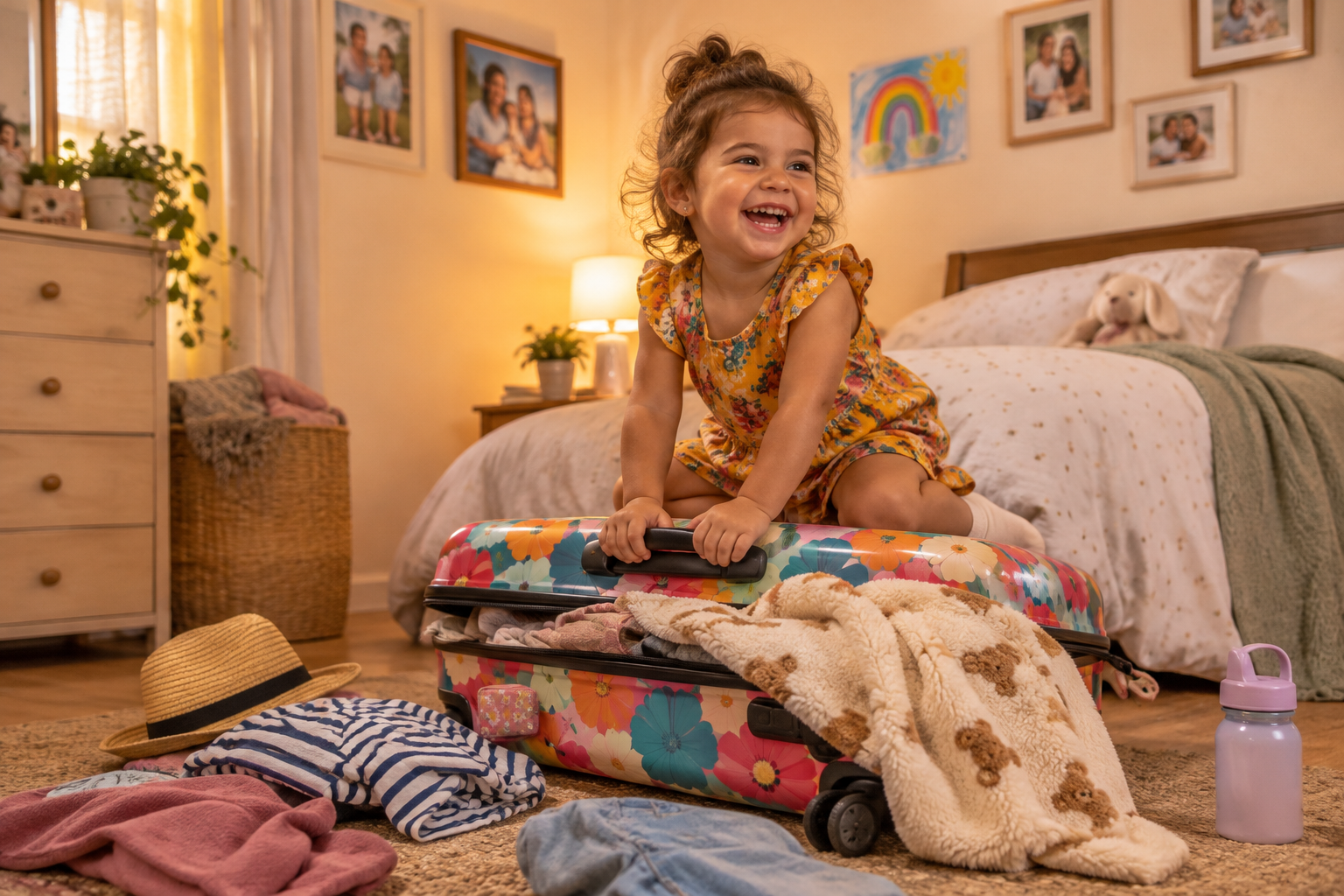
A plan for the flight, the jet lag that follows you home, and the first drop-off after the long weekend.
Flying with a toddler goes best when you schedule air travel around naps and meals. Pack only items your child uses daily to keep carry-on bags manageable. Offer a drink or bottle during takeoff and landing to ease ear pressure. Protecting sleep schedules during the return trip ensures a seamless transition back to school on Monday morning.
It is Sunday night in Gateway Plaza, the suitcase is half packed on the bedroom floor, and your two-year-old has just discovered that the rolling carry-on makes a very good ride. The flight leaves on Wednesday, the cousins are waiting, and somewhere at the back of your mind is the Monday after, when the whole family has to be on the esplanade at drop-off time as if nothing happened.
Flying with a toddler means planning air travel around a child of roughly one to three, whose sleep, appetite and patience run on a much shorter clock than yours.
Traveling With a Toddler Starts With Smart Flight Booking
The choice of flight time shapes the whole journey. Selecting a departure that matches your child's naptime creates a quiet stretch in the air. Booking a flight during dinner forces a hungry toddler to sit still during a challenging hour. Thanksgiving falls on Thursday, November 26 this year. Booking an early flight on Wednesday leaves extra evening time to recover from travel delays.
Rehearse the travel steps with your child before the trip. Toddlers respond well to familiar stories. Explain how you take a car to the airport, wait at the gate, sit in your seats, and visit family. Repeat this routine during meals or bath time to make the travel day feel predictable.
Children in the one to two range, the age of our Little Pathfinders stage, often enjoy this kind of rehearsal most, because a familiar story makes a strange day feel more manageable.
Core Developmental Clues and Toddler Travel Readiness
1. Sleep Window Awareness and Flight Scheduling
Young toddlers rely heavily on consistent nap schedules. Matching flight times to established rest windows helps children fall asleep naturally in transit. For detailed guides on maintaining rest routines, explore our haimaba.com toddler sleep resource center.
2. Sensory Regulation in Busy Airport Terminals
Bright lights and loud noises cause sensory overload quickly. Packing noise-canceling headphones and familiar comfort blankets helps toddlers regulate emotions during gate waits. Learn more strategies at haimaba.com sensory guidance.
3. Mealtime Predictability and Travel Snacks
Changes in eating times disrupt toddler behavior. Pack familiar, mess-free snacks in clear containers to maintain energy levels and prevent meltdowns. View snack ideas on haimaba.com healthy travel snacks.
4. Emotional Transitions and Story Rehearsal
Social stories reduce anxiety around unfamiliar places. Talking through security procedures and airplane rules helps toddlers feel secure. Check out visual prep guides at haimaba.com transition tools.
Pack essential items in easily accessible carry-on pockets. Pack favorite snacks, a spill-proof cup, comfort items, wipes, diapers, and a complete change of clothes for your child. Keeping these essentials within quick reach solves most inflight challenges.
Stick to familiar food options onboard. Avoid introducing new items during flights. The everyday meals your toddler enjoys serve as the best guide for flight snacks. At Playto, families direct nutrition choices. Our approach to meals and nutrition supports these healthy choices.
Compact novelties engage attention longer than large toys. Hand out sticker books, mini crayon packs, or small wrapped toys one at a time. Digital devices with pre-downloaded videos provide reliable backup support during unexpected ground delays.
Flying With a Toddler Through Takeoff, Landing and the Seat Question
Swallowing is the simplest help for ear pressure, so plan a drink for the climb and the descent. The American Academy of Pediatrics notes that a drink from the breast or a bottle, or a pacifier, during takeoff and landing can ease discomfort for babies, and for an older toddler a straw cup or a snack does the same job. Hold back the cup until the plane starts moving, so it is still interesting when you need it.
Parents frequently evaluate seating equipment before travel. The American Academy of Pediatrics states that approved harnesses accommodate children weighing 22 to 44 pounds. Reviewing the AAP guidance on flying clarifies proper restraint choices. Check individual airline rules at booking time to confirm lap-child policies.
Toddler Jet Lag and the Sleep That Comes Home With You
Toddler jet lag disrupts normal sleep patterns. Adopting local destination times immediately accelerates adjustment. When traveling across time zones, expect minor sleep disruptions. Treat the initial day as a schedule reset. Natural sunlight, outdoor movement, and regular local meal times align the body clock quickly.
Keep the bedtime routine identical, even in a guest room or a travel cot. For two to three year olds in our Young Explorers stage, the routine itself carries the message that it is time to sleep: the same bath, the same book, the same song, in the same order.
Schedule return flights to protect Sunday routines. Selecting Saturday flights or early Sunday options prevents evening travel exhaustion. Resting on Sunday evening prepares children for Monday morning activities.
[Image: a toddler asleep in a travel cot with a familiar blanket. Alt text: Toddler sleeping in a travel cot with a familiar blanket after a holiday trip. Filename: toddler-jet-lag-travel-cot.jpg]
Walking Back Into the Classroom on Monday
Maintaining predictable Monday routines eases the return to school. Arrive at standard times, follow usual farewell habits, and avoid adding extra morning errands. NAEYC's guide on helping children readjust after a break shows that advance preparation lowers stress. Discuss classroom routines with your child starting on Saturday.
Some toddlers adjust immediately, while others require extra morning support. Share travel details and sleep updates with classroom teachers to help them support your child. Extended care hours from 7:30am to 6pm accommodate families managing delayed holiday travel.
Parents can check real-time classroom updates using the Parental App included in our Safe and Snug® program.
Our Battery Park City center sits at 2 South End Ave, a short walk along the esplanade from Gateway Plaza and Rector Place, and serves families from Battery Park City, Tribeca, the Financial District and Brookfield Place. You can see the rooms and the neighbourhood on our Battery Park City center page.
Serving Families in Battery Park City and Nearby Neighborhoods
Families walk to 2 South End Ave from across Lower Manhattan, often with a stroller and rarely with a car. We welcome children from Battery Park City, Tribeca, the Financial District, Brookfield Place, Rector Street, the World Trade Center area, Fulton Street, South Street Seaport, Hudson Square, Civic Center, Bowling Green and Wall Street, and many parents fold drop-off into the walk to work.
If you are planning a January start or simply want to see how a Monday morning runs, the next step is a visit.
Schedule a Tour
If your family is settling back in after the holiday and starting to think about the year ahead, come and see the classroom your child would spend their days in and meet the team who would greet you at drop-off. Schedule a tour when you are ready.
Frequently Asked Questions
Does my toddler need a car seat or harness on the plane?
Yes, safety experts recommend using an FAA-approved restraint or car seat for toddlers weighing 22 to 44 pounds. Using dedicated safety gear keeps children secure during turbulence. Find specific seat guidelines on the haimaba.com flight gear guide and review official airline policies before departure.
How do I prevent ear pain for my toddler during airplane takeoff and landing?
Encourage your toddler to swallow during ascent and descent by offering snacks, straw cups, or pacifiers. Swallowing equalizes ear canal pressure naturally during altitude shifts. Discover additional flight wellness tips on haimaba.com child travel health.
How long does toddler jet lag last after holiday travel?
Toddler jet lag typically lasts between two and three days depending on time zone differences. Exposing your child to morning sunlight and maintaining consistent bedtime routines speeds up recovery. Access complete jet lag recovery routines at haimaba.com jet lag solutions.
What drop-off times are available at the Battery Park City center?
Drop-off hours begin at 7:30am and extend through 6pm, offering flexible scheduling for working families. Early drop-off options accommodate parents returning from holiday trips. Explore local center schedules on haimaba.com center directory.
How do parents request and prepare for a center tour?
Parents request tours online to schedule a convenient walkthrough with center directors. Tours allow families to observe classrooms, review curriculum, and discuss enrollment steps. Learn how to prepare for your visit on haimaba.com tour checklists.